
Find People Through Lompoc Records
The best starting point depends on the fact already in hand. A full name can lead into the county recorder's grantor and grantee index, where property parties appear under the names used when an instrument was recorded. An address works better in the assessor and property-tax systems. A court case number belongs in the Superior Court portal, while an older family name may be easier to place in a city directory or newspaper archive. Each source answers a different question, so one strong match is more useful than a broad list of weak possibilities.
Use a short sequence and keep a record of spellings, dates, parcel numbers, and case numbers. Those identifiers help distinguish people who share a name and make an office request much more precise.
- Start with the recorder when a name is known. Note each document number, date, and parcel reference.
- Check the court party search for nonconfidential cases, then use the Lompoc courthouse terminal if a criminal index is needed.
- Put a known address or APN into the assessor and tax tools. APN means assessor's parcel number.
- Use vital-copy channels and local archives for births, deaths, marriages, obituaries, and family lines.
- Ask the proper custodian for a record that has no public web index.
Map the Lompoc Search Offices
Lompoc City Hall keeps council records, contracts, claims, permits, business-tax material, and city requests. Santa Barbara County holds the deeper identity trail through recorded instruments, parcel records, vital certificates, and county elections. The Superior Court keeps case files apart from both governments. For copy fees, access rules, and request deadlines, use the focused Lompoc public records system.
Santa Barbara County Clerk-Recorder
Hall of Records, 1100 Anacapa Street
Santa Barbara, CA 93101
805-568-2250
Santa Barbara Superior Court
115 Civic Center Plaza
Lompoc, CA 93436
805-737-5452 Civil
City hours are weekdays from 9 a.m. to 5 p.m. The local court lists office hours from 8 a.m. to 3 p.m., and its lobby terminal is a key fallback for records the web does not index.
Open the Lompoc Recorder Index
The Santa Barbara County recorder is the strongest official name-first tool for Lompoc. It indexes deeds, liens, maps, and other recorded instruments by party. Enter an individual as last name followed by first name, or start with a surname and first initial when the spelling is uncertain. Recording dates can narrow a common name. The advanced form separates grantor, the party giving an interest, from grantee, the party receiving one.
The Official Records Search menu offers name, document type, document number, map book and page, and advanced routes.
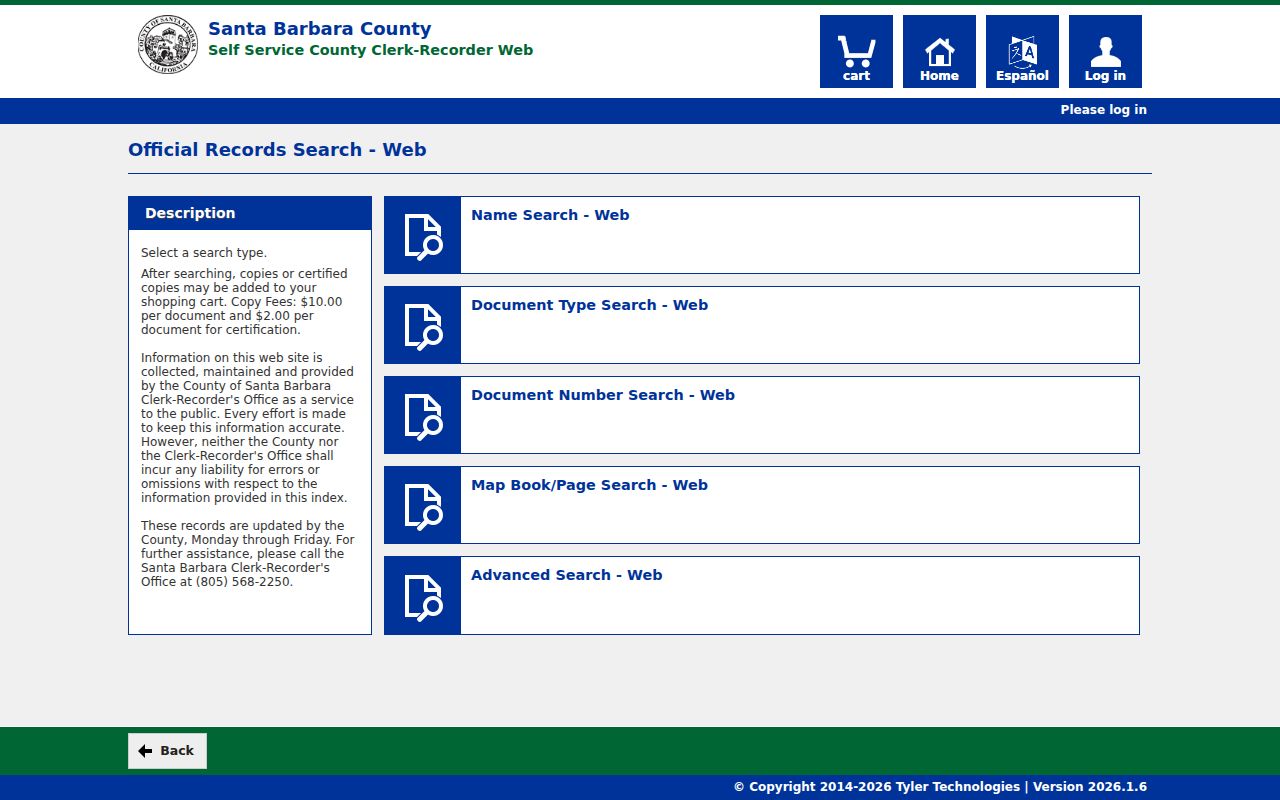
Copies and certified copies can be placed in the portal cart. The menu lists $10 per document copy and $2 per document certification.
| Search field | Input | How it helps |
|---|---|---|
| Name | Last First | Finds recorded parties |
| Date start and end | Optional dates | Separates similar names |
| Grantor or grantee | Advanced name fields | Follows each side of a transfer |
| Document number | Exact instrument ID | Returns a known filing |
| Document type | Selected category | Limits the kind of record |
- Index
- A finding list that points to a record. It is not always the document image.
- Grantor
- The party who gives or transfers an interest.
- Grantee
- The party who receives that interest.
- Certified copy
- A copy the custodian formally attests is true.
Advanced operators make this index unusually useful. A dollar sign requests a sounds-like match, a question mark allows a possible wrong letter, an asterisk expands a word start, and a tilde supports fuzzy or proximity searching. These tools help with initials, OCR errors, and surname variants.
Link Lompoc Addresses to People
A known street address should move through three systems. The assessor turns the address into an APN and tax-reference map. The property-tax portal organizes secured and unsecured bills by parcel, address, bill number, and year. The recorder then uses the APN, legal description, or party names to trace a chain of title. This order matters because the inspected assessor form has no owner-name field.
The assessor parcel and value lookup accepts parcel number, house number, unit, street name, and map book or page.
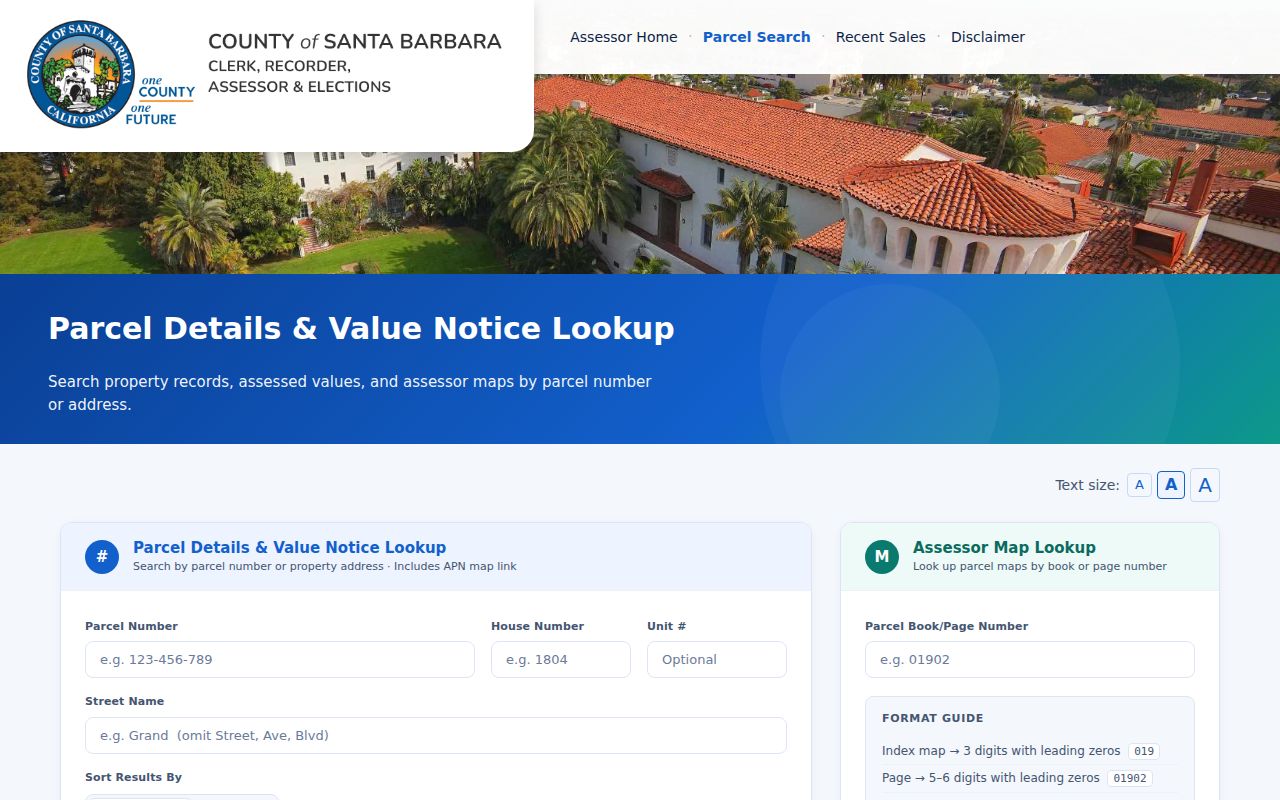
Try part of a street name without a suffix if a full address fails. The assessor warns that its maps support tax work and are not legal documents.
For bill history, the Santa Barbara property-tax search covers 30 years of unpaid bills and 10 years of paid bill history.
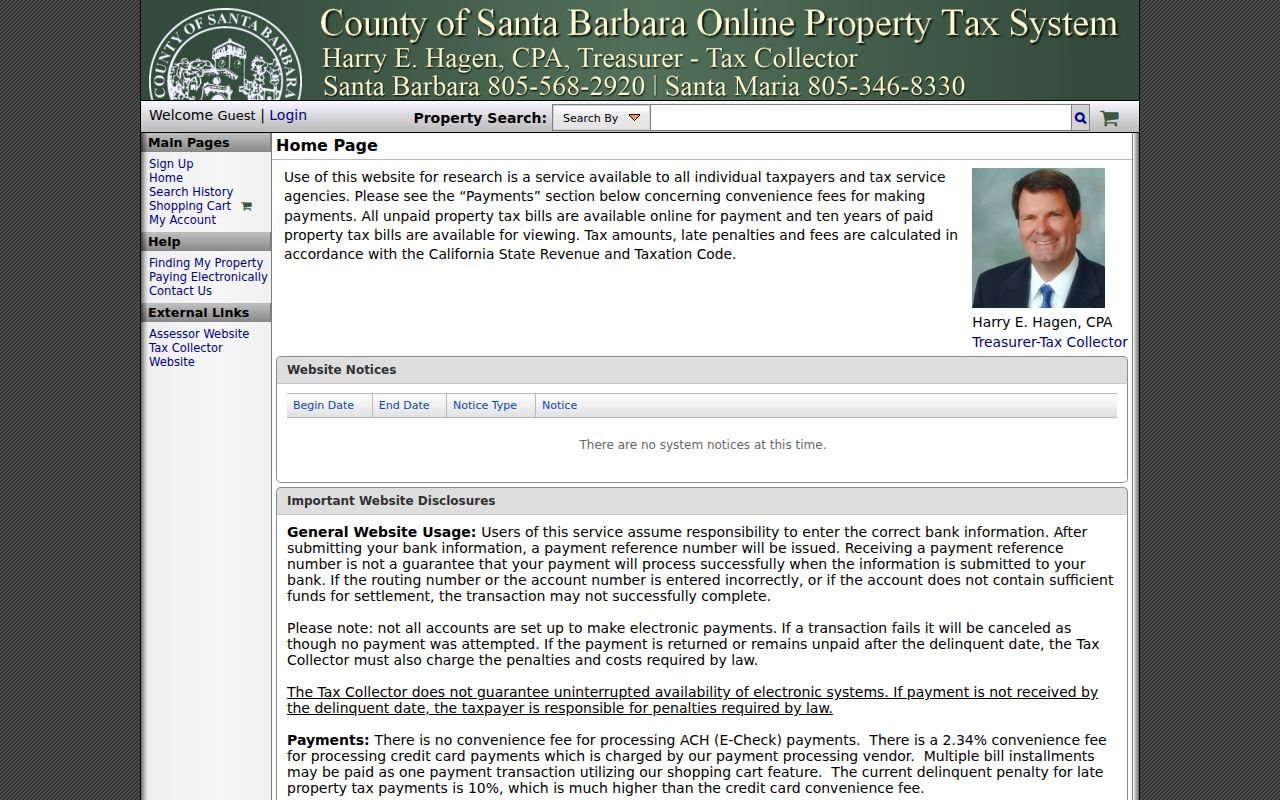
Tax results can supply the parcel and address reference needed to return to the recorder, but they should not be treated as a legal ownership opinion.
Note: An address to APN to deed sequence is often faster than forcing a name into an address-based Lompoc search form.
Extend a Lompoc Court Search
Santa Barbara Superior Court's public portal searches nonconfidential, nonsealed civil, criminal, family, probate, small claims, and traffic registers of actions. A register of actions is the event list for a case, not the full official file. Results may show the case number, case type, parties, filing date, hearings, events, dispositions, and allowed image links. The court warns that remote information is not the official record.
The web has a major limit: the court says no online criminal index is available. Public terminals in the Lompoc Division lobby supply the next step, and a copy request may be sent in person, by mail, or by email. Sealed matters, juvenile files, and restricted family records remain unavailable. The court will not confirm birth dates, partial Social Security numbers, addresses, or driver license numbers by phone or email.
The Superior Court search agreement shows the point where web access begins. Its screen also makes clear that access rules govern every remote lookup.
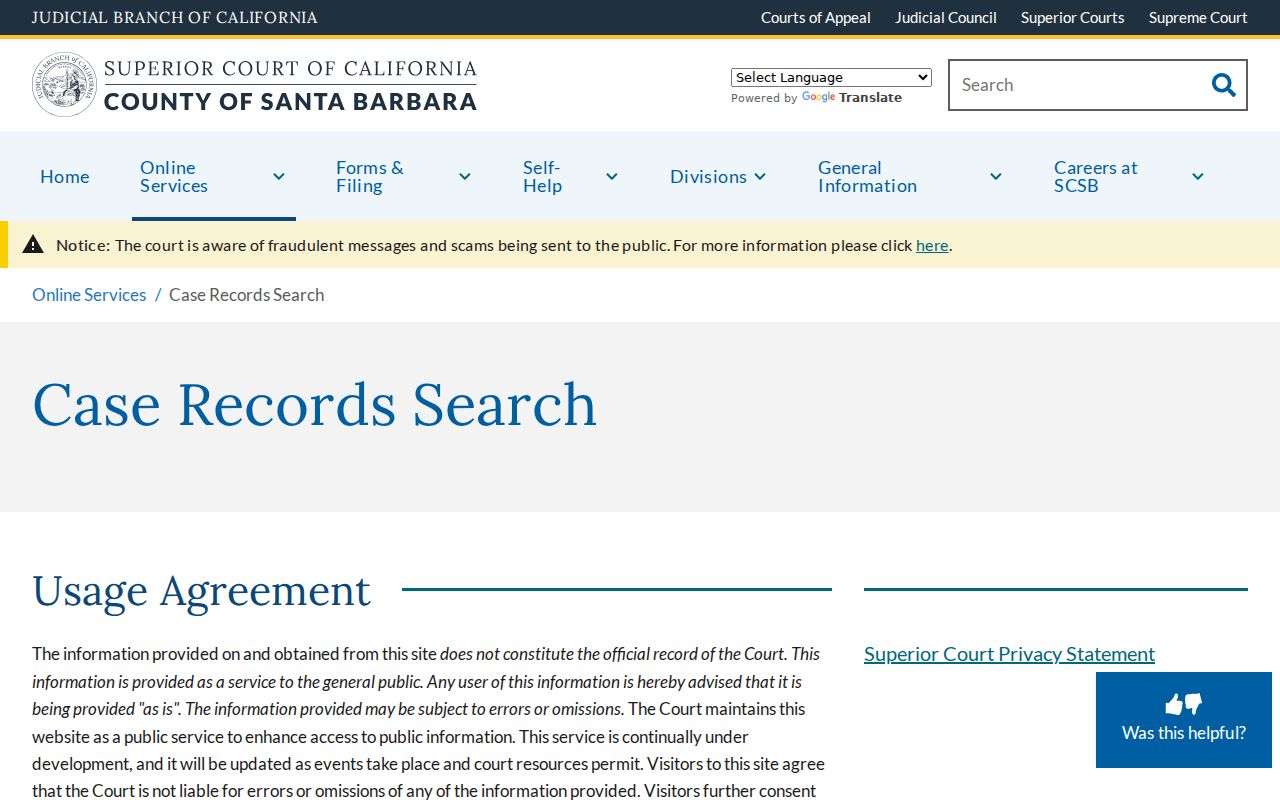
The agreement is a gateway, not proof of a case result. Confirm any important docket through the clerk or an official copy.
| Channel | Records found | Best use | Main limit |
|---|---|---|---|
| Public Portal | Allowed case registers | Party and case-number search | Not the official record |
| Civil Portal | Civil registers and allowed images | Reviewing civil events | No family or probate images |
| Lompoc terminal | Public courthouse index access | Criminal-index fallback | In-person use |
| Copy request | Plain or certified copies | Reliable final record | Up to 14 business days |
Order Lompoc Vital Records
Santa Barbara County Clerk-Recorder issues copies for county births, deaths, and marriage licenses dating from 1850 to the present. Divorce files belong to Superior Court. California divides most birth, death, and public-marriage copies into authorized and informational versions. An authorized copy calls for a sworn statement and proof that the requester fits a legal category. An informational copy is marked as not valid to establish identity. Confidential marriage records are limited to the parties or a person with a court order.
County orders can begin online, at the counter, by mail, or by fax under the county instructions. Email is not accepted for these applications. Mailed authorized requests need the sworn section notarized, and the search fee remains due if no matching record is found. County fees effective in 2026 are $34 for birth, $26 for death, $23 for fetal death, and $19 for marriage.
The county vital-record order portal separates certificate types before the application begins.
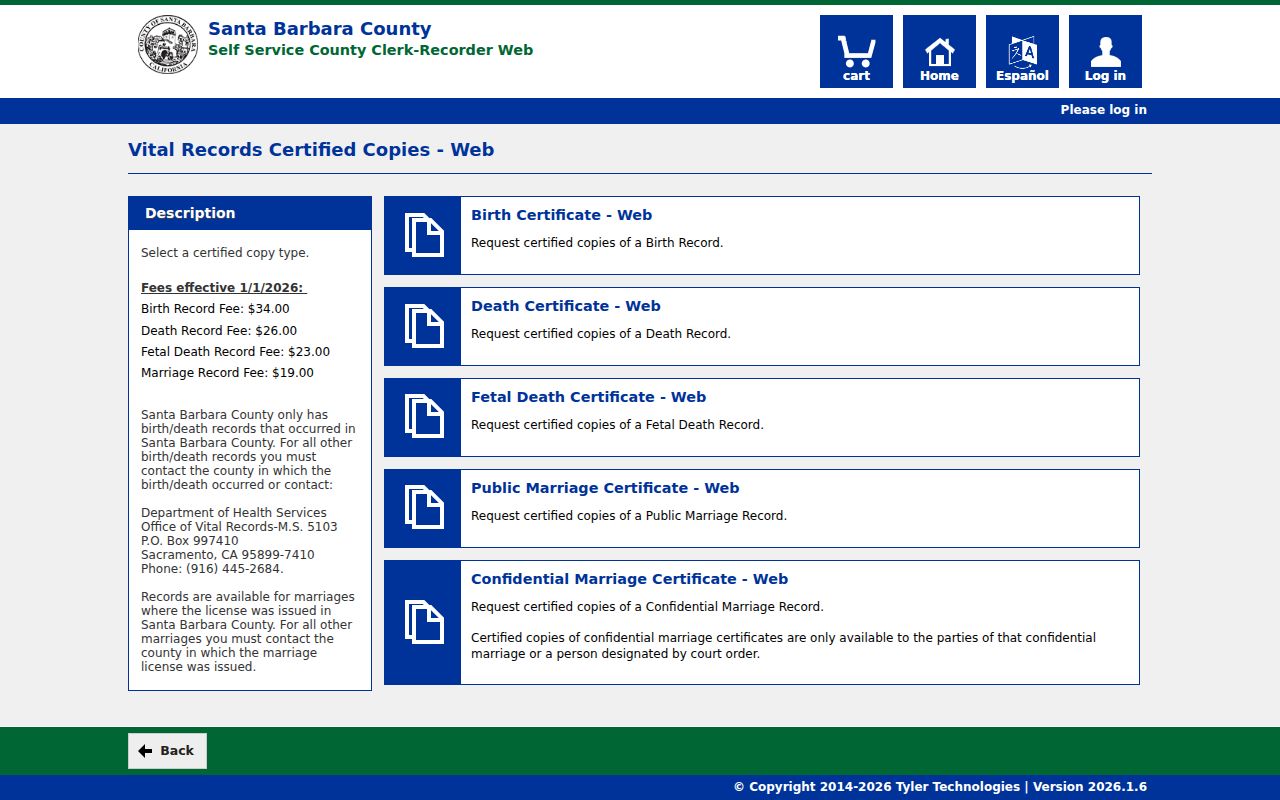
That order path supplies a certificate, while historical name indexes and local archives are often better for early family research.
Keep Lompoc Voter Lookups Personal
California's voter-status tool is meant for a voter to confirm a personal registration. It asks for first name, last name, date of birth, and either a California driver license or ID number or the last four digits of a Social Security number. A successful match can show status, party preference, vote center or polling place, language preference, and ballot status. It does not show how anyone voted.
The My Voter Status lookup is the official self-service route linked by Santa Barbara County.
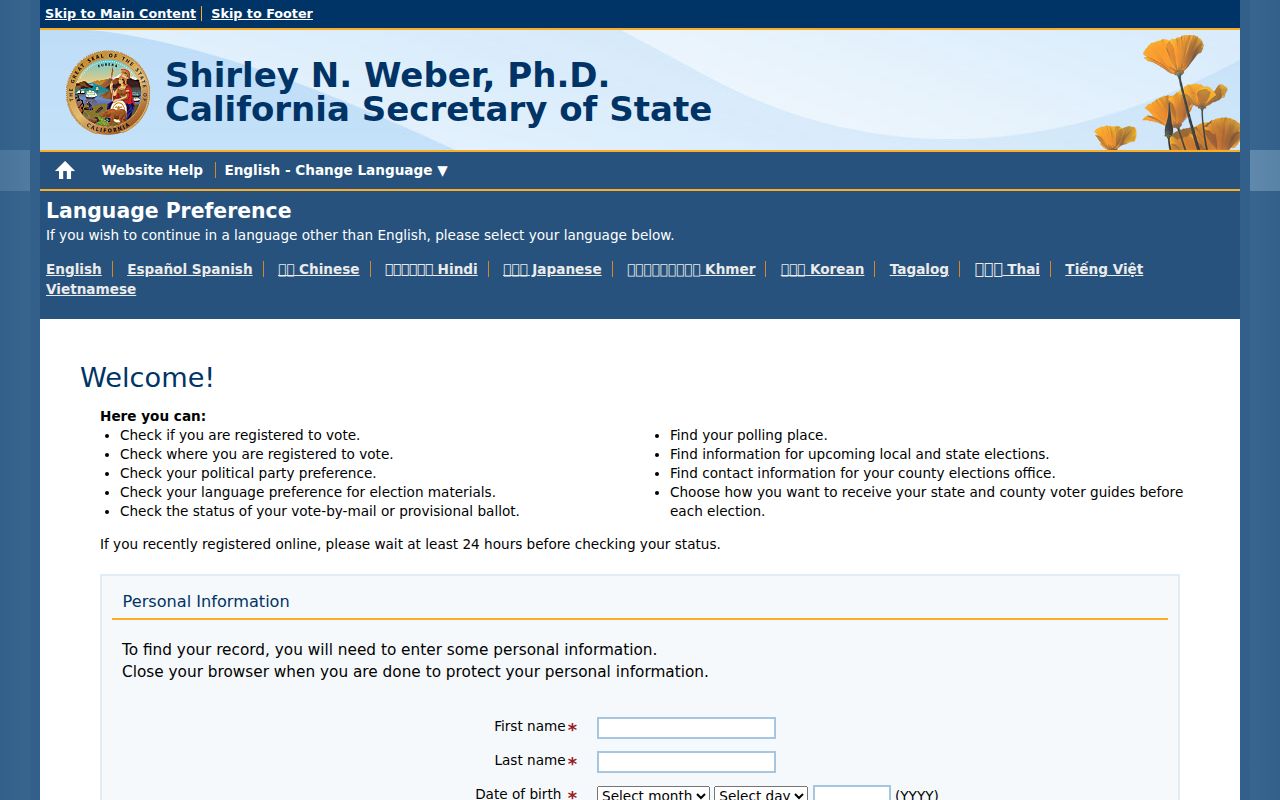
A full voter file is not a casual directory. California limits access to stated election, scholarly, journalistic, political, or governmental uses and requires an application. The Lompoc voter registration reference explains the county and state request paths.
Trace Lompoc Names Before Databases
Older Lompoc residents often appear in print long before they enter a modern portal. Sahyun Library has verified regional city directories from 1886 through 1991 that cover Santa Maria and Lompoc. A directory can place a resident or business at an address, while an obituary, legal notice, marriage item, or school report can add relatives and dates.
The genealogical society's directory holdings document that 105-year span.
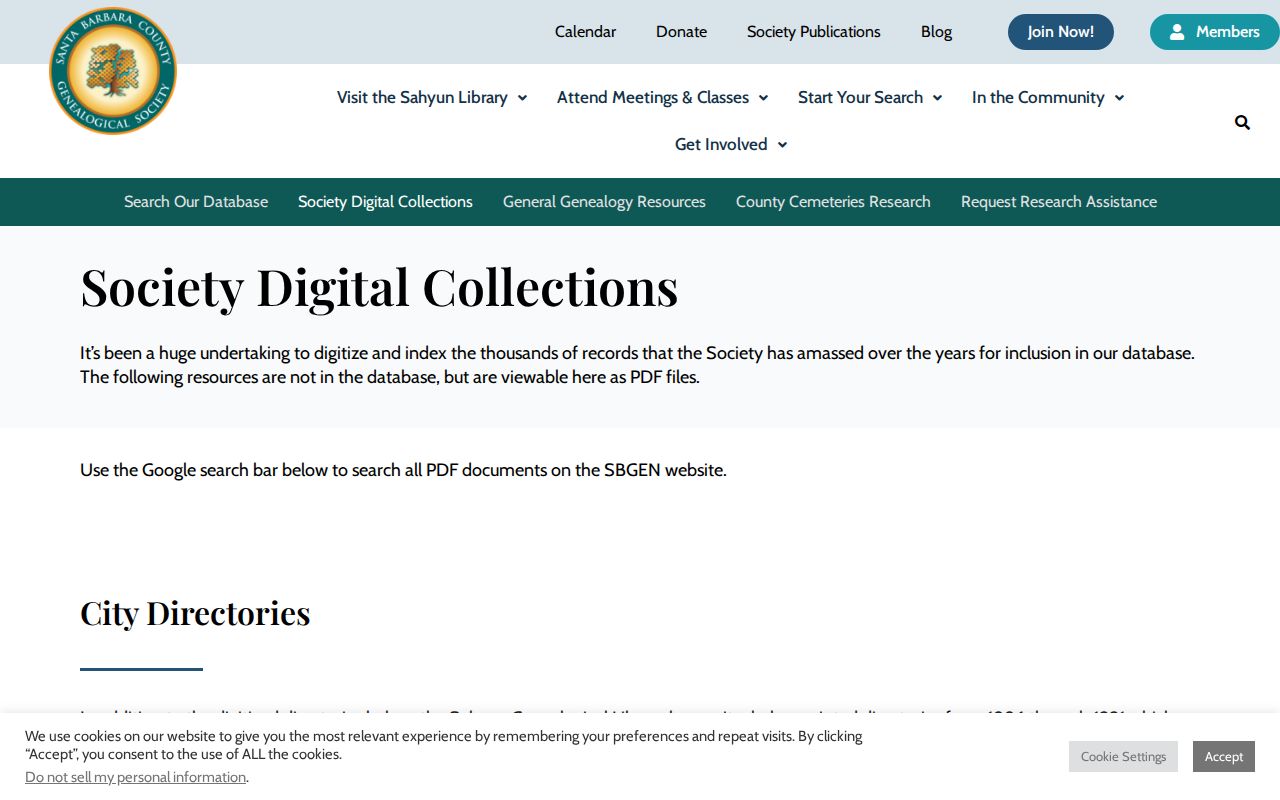
Its searchable collections also include local marriage, death, and burial indexes. Lompoc Review is digitized for 1919 through 1932, and licensed Lompoc Record archives extend the newspaper trail much further.
The Lompoc Valley Historical Society reference library adds photos, subject files, family albums, and genealogy help. Exact item years are not published, so contact the society with a name, date range, address, or local group rather than assuming a catalog entry exists.
Search Lompoc Business Names
A business trail has city, county, and state layers. Lompoc's City Clerk administers Business Tax Certificates, but no public active certificate database was found. The application and office files may identify a business name, address, owner, and contact details when disclosure rules allow. County fictitious business name records cover trade names, while California entity filings cover corporations, limited liability companies, and limited partnerships.
The California business entity search can return an entity name and number, type, status, formation or registration date, agent, addresses, and filing history.
Match the entity address and agent against county records before deciding that two similar business names belong to the same operator.
Verify Lompoc Professional Records
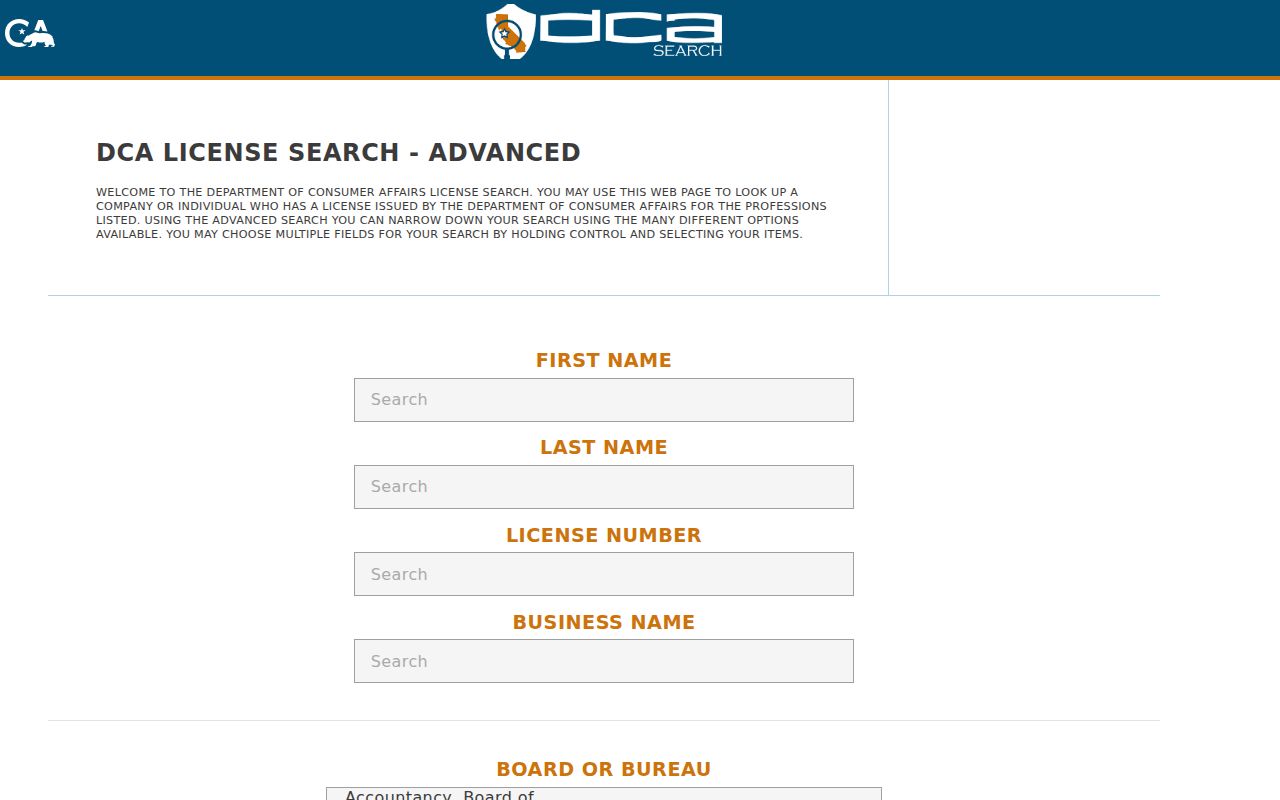
California license boards act as official directories for regulated work. Search fields vary, but the state umbrella lookup can accept first and last name, license number, business name, registry number, board or bureau, license type, and geography. Results may show status and public discipline indicators. Separate official searches cover contractors, attorneys, real estate licensees, medical professionals, nurses, and educator credentials.
The advanced professional license search provides a useful way to narrow a common Lompoc name by board and license type.
A license match verifies the public record held by the regulator. It should still be compared with another identifier before it is linked to a local person.
Use Lompoc Custody Lookups Carefully
The Santa Barbara County custody lookup searches first name, last name, or inmate number and may show location, charges, custody status, and county identifier. It is the local jail channel for a person booked into county custody. State and federal systems are separate, so a missing county result does not answer whether someone is held elsewhere.
Custody data changes quickly. Treat a result as a time-specific status, read the agency warning, and confirm any consequential detail through the keeper. Community-safety registries also publish only what California law permits, not every record an agency may hold.
Note: A custody search is a status check, not a finding of guilt or a substitute for the court's official case record.
Route Lompoc Search by Geography
A Lompoc mailing address does not always fall inside the city. Vandenberg Village and Mission Hills developed in the surrounding county area, and records for those places may route to county planning, the sheriff, the assessor, and the recorder instead of city departments. Start with the parcel or address in county tools, then confirm whether the site lies within Lompoc municipal boundaries before requesting a permit, code, or police file.
This split explains why City Hall may have no record even when the postal address says Lompoc. The county planning area, zoning layers, tax parcel, and agency named on the underlying filing are better jurisdiction tests than the city name in a mailing line.
Move Lompoc Search Into Archives
Lompoc's earliest people records belong to a different system. La Purisima Mission was founded in 1787, and the original site was destroyed by the 1812 earthquake before the mission moved. Research from that era belongs in mission and early California population sources, not in county civil certificates that begin later.
County historical archives carry selected real estate and vital materials back to 1850, recorded maps from 1850 forward, and a Water Claims Book from 1877 through 1918. The online historical real-estate index bridges the twentieth-century span that does not fit neatly into the post-1975 search path. Book and page references from that index lead to lobby images or copy orders.
Respect Lompoc Search Privacy
Public access has firm boundaries. Juvenile and sealed court matters, confidential marriages, protected voter files, restricted law-enforcement material, and private identifiers do not become open merely because another related record is public. Court screens may redact information or limit remote images, and informational vital copies do not establish identity.
California's Safe at Home program supplies a substitute mailing address for eligible people facing safety risks. Participants receive special voter-registration instructions, and confidential voters are excluded from public voter-data products. A missing or substitute address should never be treated as an invitation to work around that protection.
Continue When Lompoc Search Stops
A failed web form does not mean the record does not exist. Try the office counter, a lobby kiosk, a public court terminal, a mailed or emailed copy request where allowed, the local historical society, or a county library collection. For city and agency files without a dedicated index, a California Public Records Act request should name the record type, subject, date range, department, and desired electronic or paper format.
Agencies generally make a disclosure determination within 10 days and may extend that period by up to 14 days for unusual circumstances. That is a decision deadline, not a promise that every record will arrive in 10 days. Ask the office to help identify responsive files if the wording is too broad. Keep the response, request number, and custodian contact with the record trail.
Official records have context that compiled commercial lists often lose. Dates, case numbers, parcel IDs, custodians, and copy certifications make it possible to verify a match. Stop when the evidence conflicts, and return to the source instead of forcing two people into one identity.